Francesco
Doria Lamba

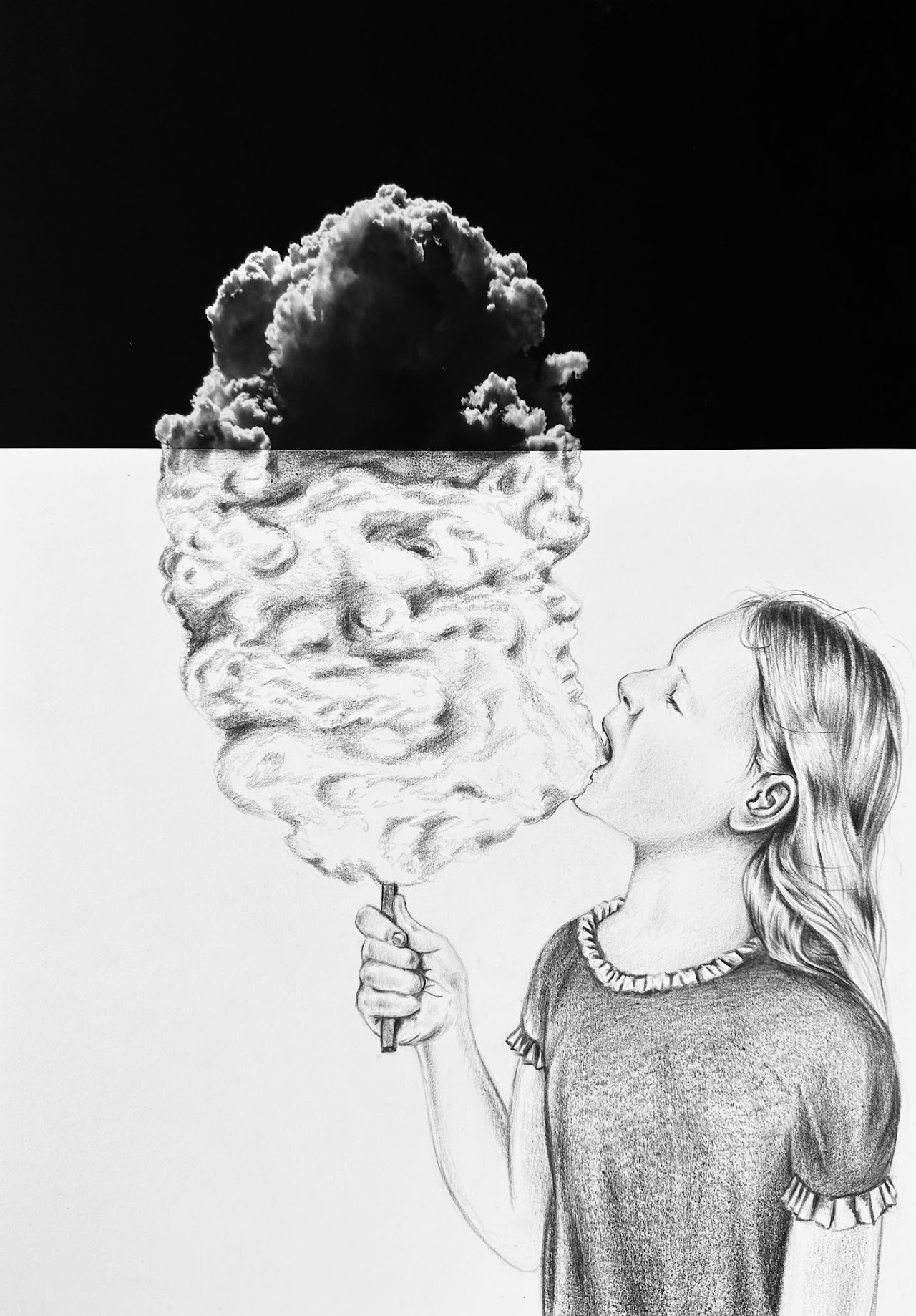
2025
Graffiti drawing and photography on cotton paper
17” X 12”
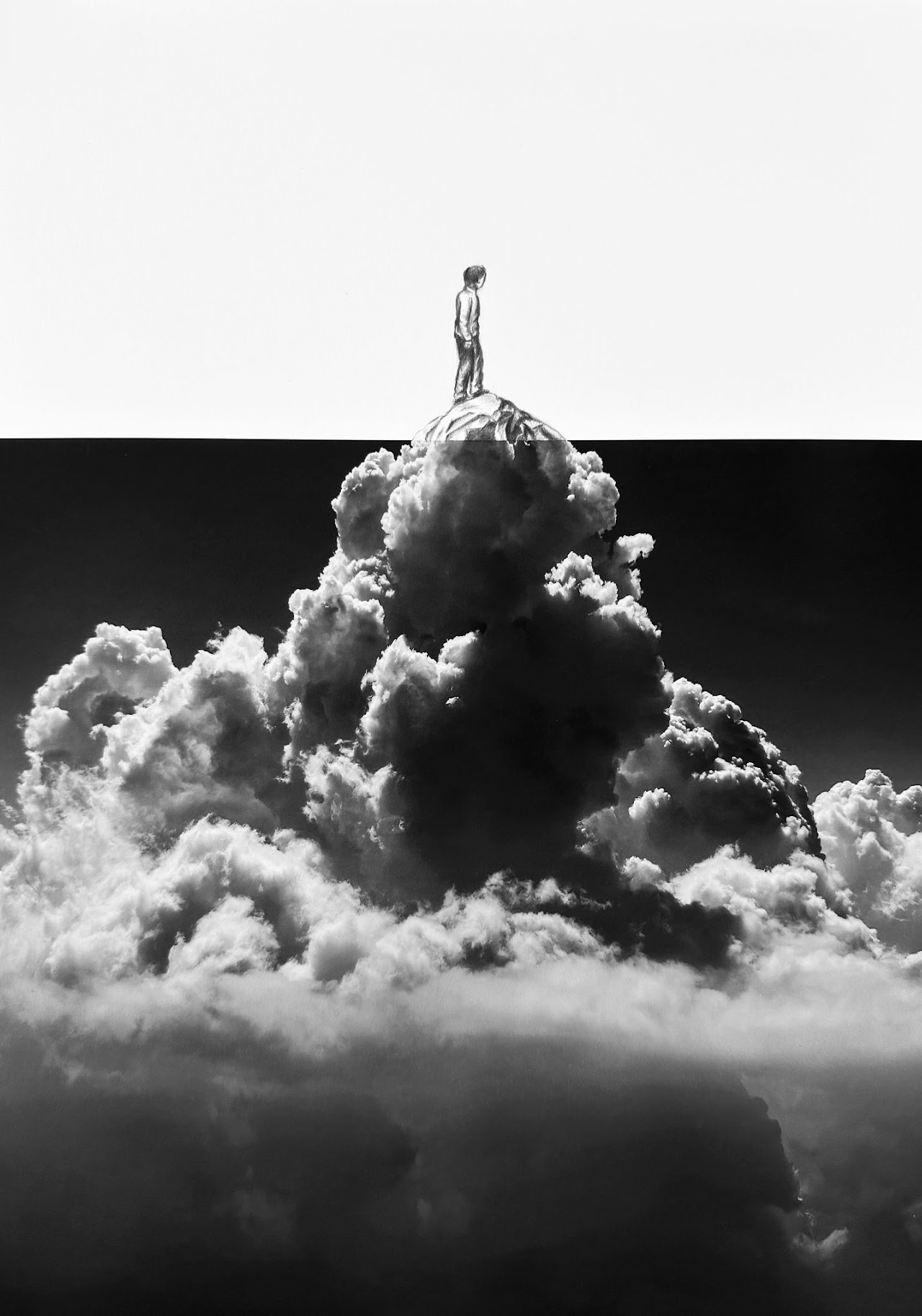
2025
Graffiti drawing and photography on cotton paper
17”X 12”
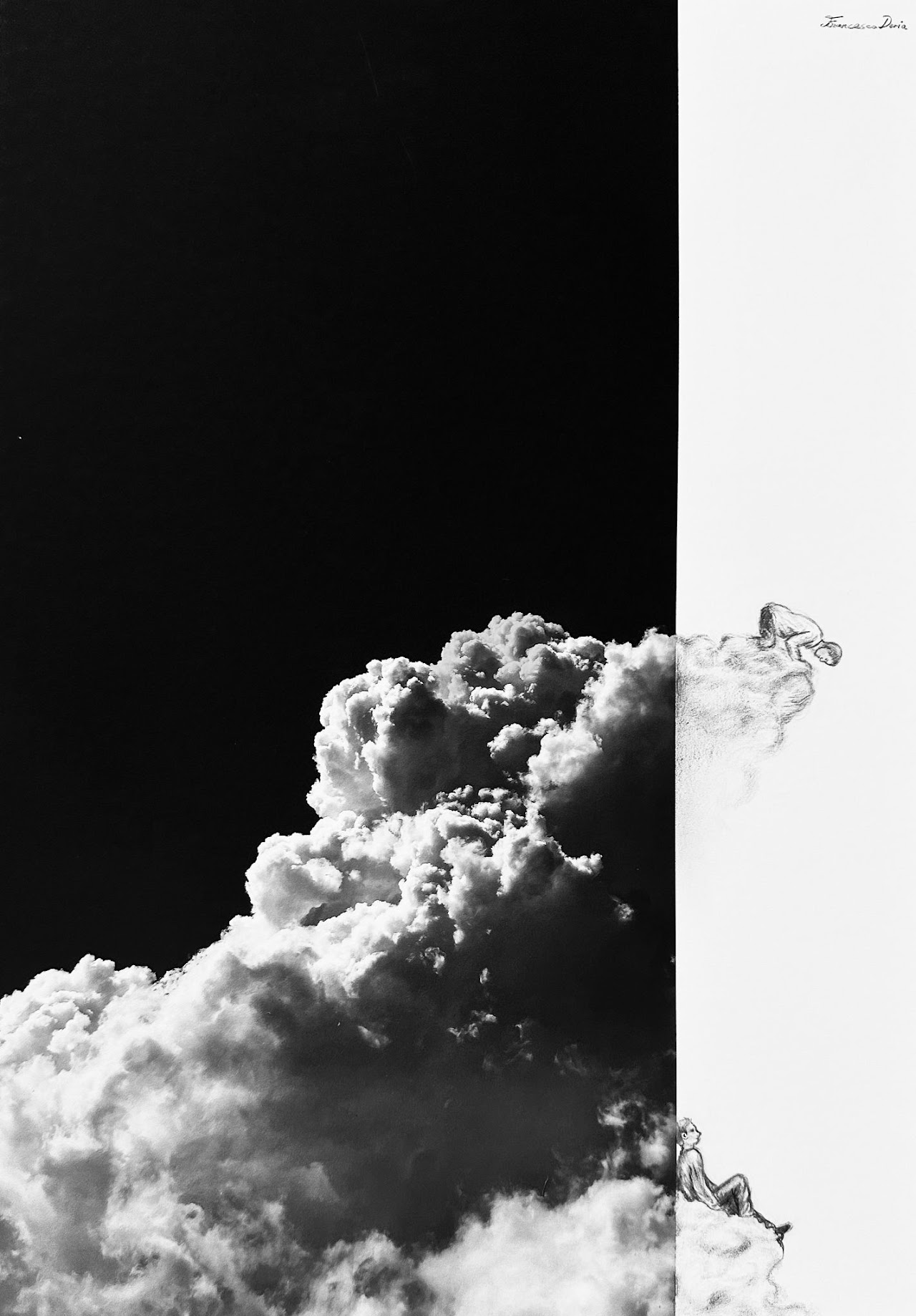
2025
Graffiti drawing and photography on cotton paper
17” X 12”
Francesco Doria navigates the liminal space between perception and subjectivity, producing a multidisciplinary practice that spans drawing, photography, painting, and installation. His works bring together ephemeral traces of reality and imagination, allowing photographic fragments and figurative drawing to converge, and occasionally to converse with other media. In these layered compositions, the act of seeing becomes both subject and medium, as Doria crafts visual narratives that interrogate the intricate interplay between observation, memory, and experience.
Before devoting himself fully to art, Doria trained as an industrial designer, discovering through semiotics the poetic ability of objects to embody thought. He studied at Central Saint Martins in London, where he refined his understanding of form and perception, and briefly extended his sensibility to 3D design in Berlin. His early professional path unfolded across London, Milan, Vienna, Genoa, Turin, and Lisbon, involving collaborations with multiple brands, as well as entrepreneurial ventures represented all around Europe and notably allowed him to open and design a corner shop at the airport of Milan for his own accessories brand and cultural initiatives such as the GenovaJeans Festival, which he helped to conceive.
A life altering ski accident nearly claimed his life and irrevocably transformed his path. Temporarily paralyzed and mute, Doria confronted the profound fragility of existence. In that silence, creation ceased to be an ambition and became an act of survival, an elemental necessity. During his long rehabilitation, art emerged as a means of reassembling both body and spirit, of re-entering the world through gesture and perception.
Through photography and drawing on cotton paper, he began a dialogue between image and intuition, the photograph as a trace of vision, the drawing as its echo in thought. This exploration of how perception materializes became a cornerstone of his practice, where the mechanical and the meditative dissolve into one another. Later, his focus expanded to painting on jeans fabric, a material rooted in Genoa’s maritime history and his own lineage. Jeans became both vessel and metaphor: the cloth of crossings, endurance, and transformation. His debut exhibition for the GenovaJeans Festival marked the beginning of this return to life through creation.
Doria’s practice has deepened and expanded. At Triple F in Rome, formerly the atelier of Mario Schifano, he created a sculptural installation with SO-LE Studio, designed to accompany the leather works of Maria Sole Ferragamo in a dialogue of material tension and poetic equilibrium. For SO-LE Studio’s Milan flagship, he conceived Sognante, an installation inspired by the mutable architecture of clouds: photographic fragments decomposed and recomposed into a suspended landscape where drawing and photography merge into a dreamlike encounter. At Gracis Gallery in Milan, his solo exhibition Daydream offered a meditation on perception and thought, uniting image and gesture in a single, breathlike rhythm.
A subsequent period of artistic research in Lisbon brought new intimacy and stillness to his practice. Immersed in the city’s maritime light and the cadence of daily life, Doria explored the ocean as both mirror and metaphor, a shifting horizon where the boundaries between seeing and being dissolve. Most recently, during Milan Design Week, he unveiled Informale, a collaboration with Costantino Gucci that examined tapestry, mirrored surfaces, and the fragile frontier between art and design.
Doria’s sensibility is also shaped by a lineage spanning ten centuries. His family’s enduring Genoese presence, intertwined with maritime trade and artistic patronage, carries the artistic echoes of masters once commissioned by his ancestors, Caravaggio, Rubens, Tintoretto, and Van Dyck. Their presence, refracted through time, continues to inspire him and inform his search for light, structure, and transcendence. Even jeans fabric, first conceived in Genoa, whose early production drew in part on indigo-dyed cotton that his family was importing around the mid-1500s and later carried across the world by sailors and traders, returns in his practice as both origin and omen: a tactile emblem of continuity, transformation, and histories in motion
Ultimately, Francesco Doria’s work unfolds as a meditation on perception and identity, a poetic inquiry into how the act of seeing becomes a form of being. Between material and immaterial, light and shadow, thought and sensation, his art seeks to articulate the invisible space where form itself begins to dream.